
9.9 MW BESS2 MW data centerPrivate 5G and/or fiber
Kinetic Shield · Licensable data center architecture
Smaller data centers. One coordinated network.
Kinetic Shield is a modular, containerized design offered through fabless design and IP licensing. Configurations include 9.9 MW battery energy storage (BESS) + 2 MW data center and a smaller 4.99 MW BESS + 1 MW data center, connected through private/industrial 5G and/or fiber. Quantum Key Distribution (QKD) can be added as an extra security layer. Multiple smaller sites work together as a larger, coordinated network, with flexible electricity demand and capacity close to users.
European Commission · EIC Accelerator
Seal of Excellence
Awarded May 2026 to the underlying Smart Infrastructure proposal incorporating Kinetic Shield.
Recognition of the proposal, not an award to xIntegra GmbH or product certification.
Intellectual property
Patent applications pending
Reference architecture and control technology.
Energy, compute and connectivity in one modular site.
A containerized architecture that can grow site by site, with the right configuration for each location.
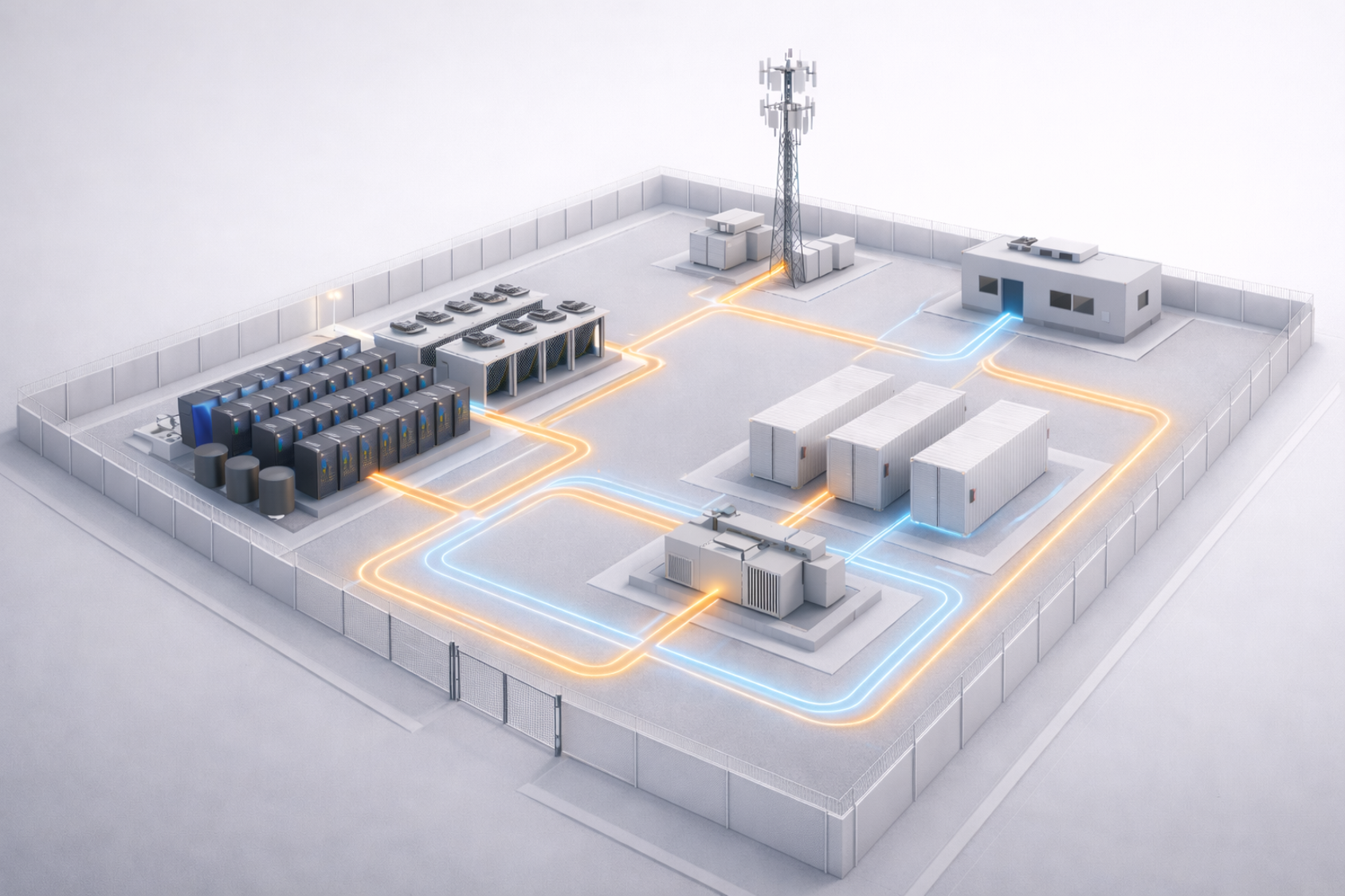
Local infrastructure, network-wide coordination
Mix site sizes to match local demand and grid conditions: 9.9 MW BESS + 2 MW data center, or 4.99 MW BESS + 1 MW data center. Coordinate capacity across the network.
9.9 MW BESS2 MW data centerPrivate 5G and/or fiber
4.99 MW BESS1 MW data centerPrivate 5G and/or fiber
One coordinated network
Shared orchestration across sitesEnergy flexibility · distributed workloads · resilient services
Private/industrial 5G and/or fiber · optional QKD
Connectivity designed for industrial use.
Private/industrial 5G and/or fiber links connect users, equipment and sites within the selected architecture. The communication design is specified alongside workload needs, latency, availability and site conditions.
For an additional security layer, Quantum Key Distribution (QKD) can protect cryptographic key exchange over suitable optical links. It is an optional part of the security design, integrated with the network’s other security controls.
Small at each site. Stronger as a network.
A design for deployability, grid support and continuity.
01
A faster route to power
Compact sites using either configuration can use simpler permitting routes where available and make better use of local grid capacity. Smaller footprints can also reduce land requirements and community conflicts.
02
Grid flexibility built in
BESS and coordinated compute scheduling manage demand peaks and can support grid services. Energy use adapts to grid conditions within the operating limits of the workloads and equipment.
03
Resilience across the network
If one node is lost to a grid outage, technical failure, cyberattack or physical incident, other nodes are designed to continue operating. Replicated data, transferable workloads and reserved capacity allow eligible services to fail over across the network.
04
Lower latency close to demand
Distributed computing capacity brings processing closer to users, industry and critical infrastructure. This can reduce communications latency compared with distant centralized facilities.
Redundancy designed around the service.
The network is designed to isolate an affected node and preserve the overall service through the remaining sites. Delivery depends on independent power and communication paths, data replication, reserved compute and energy capacity, and tested recovery procedures. The licence scope defines which workloads are protected and their recovery targets.
Why target BESS modules below 10 MW?
Permitting and connection timing depend on the location, network capacity and approvals. Italy's simplified rules for BESS up to 10 MW do not automatically cover the complete data center.
Smaller local power requirements can widen the range of suitable connection points. Availability, cooling, noise, land use and protected backup reserves are assessed for each implementation.
Market perspective
Why modular data centers and BESS belong together.
BCG and Deloitte/Agora examine the value of flexible connections. NVIDIA’s architecture, Tesla’s recruitment signal and Chinese demonstrations illustrate the market direction. Our insight explains what this means for an investment decision.
Power sooner. Grow in modules. Support the grid.
Read the insight and external sources →Fabless: design and IP, implemented by partners
License the design. Deliver it with your partners.
For data center developers, infrastructure investors, equipment manufacturers and integrators: access the reference architecture and control and coordination IP under a licensing agreement. Qualified manufacturing and implementation partners deliver the physical infrastructure.
Request licensing informationLicensing scope and commercial terms on request.
Define your licence
01Architecture and integration scope
02Control and orchestration licensing
03Partner implementation and phased deployment
Build an implementation around your operating model, rollout plan and selected delivery partners.
For developers, operators and delivery partners.
Discuss the licensing perimeter, implementation rights and commercial terms. The offer is a reference design and concept for partner delivery, with technical scope agreed for the intended deployment.
Explore implementation partnerships →Operating data centers
Preparing for the EU energy label?
Explore the pilot for energy and water evidence, improvement priorities and the investment case.
Explore label readiness →